Understanding Low-Load Resistance Training
Why We Work Towards the Shake.
We work with many different methodologies in the Movement Lab. Although the studio is fully equipped with classical Pilates apparatus, the work we do isn't limited to Pilates. Alongside the reformer, tower and chair, you'll often find us working with resistance bands, free weights, bodyweight exercises, wall sits and simple biomechanical movement drills. Sometimes these tools are integrated into Pilates exercises themselves; at other times they exist completely independently. Each approach has a different purpose and develops a different quality within the body.
Sometimes we're exploring biomechanics and refining the way a joint or muscle functions. Sometimes our focus is precision, coordination and efficient movement. At other times, we're deliberately asking a muscle to continue working until it approaches fatigue. This is known as low-load resistance training, and it's one of the most valuable training methods we use in the studio. It often prompts questions because it feels very different from both traditional strength training and classical Pilates.
So, what exactly are we doing, and why?
What is low-load resistance training?
Although the name sounds technical, you've almost certainly experienced this type of training many times in the studio.
It's the wall sit that feels comfortable for the first twenty or thirty seconds before your legs begin to burn. It's the resistance band around your ankles that asks you to keep stepping long after you thought you were finished. It's the small weighted balls in your hands as your arms gradually become heavier with each repetition. It's the barre work where we stay in a bent-knee position just a little longer than you'd like, or the lunge sequence where the challenge isn't how much weight you're lift, but how long you're asking the muscles to keep working.
All of these exercises have something in common. The challenge doesn't come from increasing the load; it comes from asking the muscles to keep working for longer. In exercise science, this is known as time under tension (TUT)—the amount of time a muscle is actively working during an exercise. The load itself is relatively light, but the muscles remain under continuous tension until they begin to fatigue. This is why these exercises can feel surprisingly demanding. Rather than relying on heavy loads, they gradually ask more and more of muscles that are already working.
In many movement disciplines, including dance conditioning and athletic training, we deliberately work towards the point where the muscles begin to tremble. The shaking isn't the goal; it's a sign that the muscles are working hard enough to stimulate adaptation. Once we arrive there, the real work often begins. We stay there for as long as the movement remains productive, allowing the muscles and nervous system to adapt before we recover and begin again.
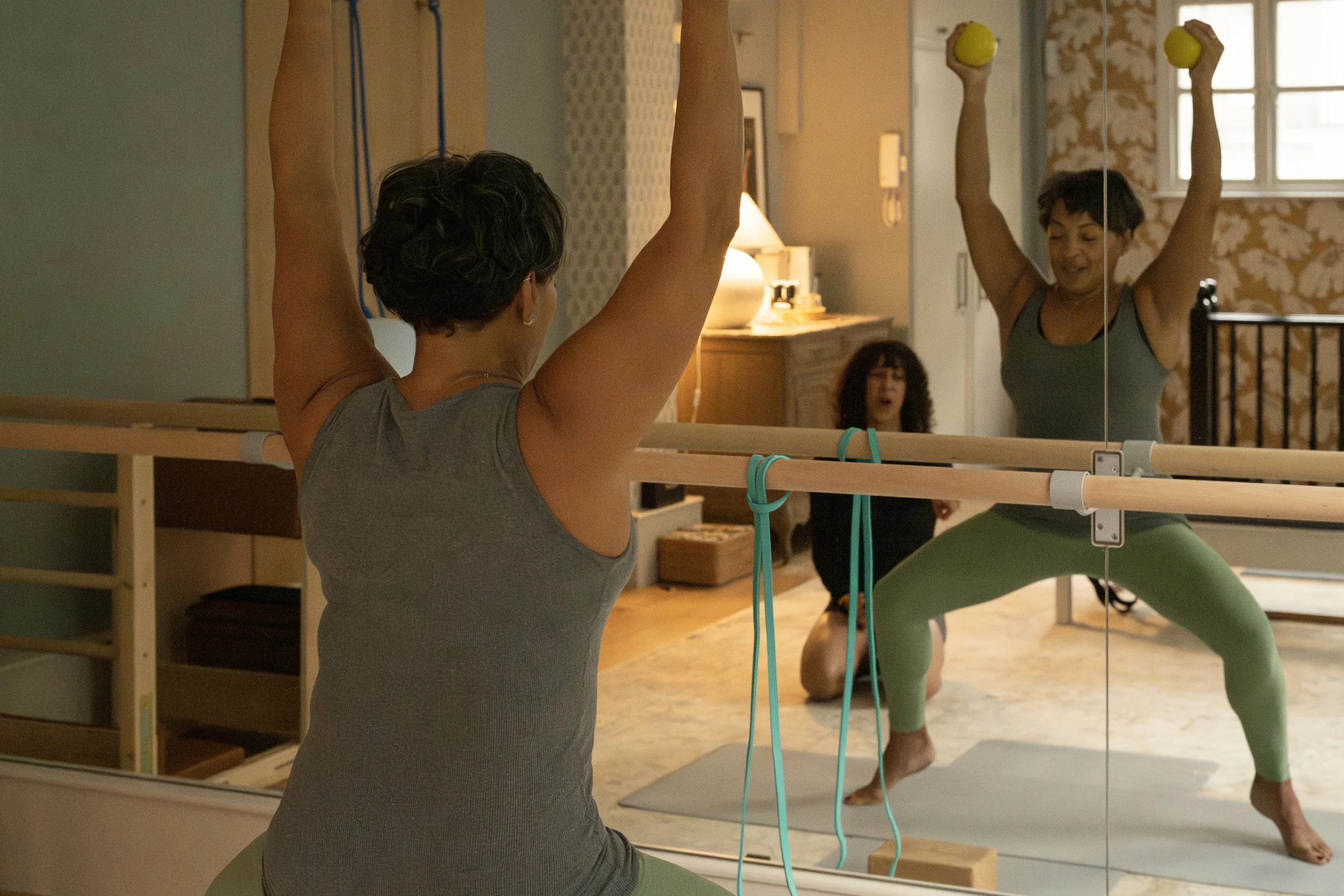
What is happening when your muscles begin to shake?
One of the first things clients ask when we begin this type of work is, "Is the shaking normal?"
The short answer is yes.
As the muscles continue working under time under tension, they gradually begin to fatigue. At first, your body recruits the muscle fibres that perform the movement most efficiently. As those fibres tire, your nervous system recruits additional motor units—groups of muscle fibres controlled by a single nerve—to help maintain the same level of effort. This process, known as motor unit recruitment, is one of the ways your body adapts to increasing demand.
The familiar trembling or shaking is often a visible sign that this process is taking place. It doesn't necessarily mean the muscle is "failing"; it simply means your nervous system is working harder to keep the movement going as fatigue builds.
We're not training the shake; we're training what happens because of it.Why do we deliberately work towards fatigue?
The important thing to understand is that we aren't chasing the shake for its own sake. We're not training the shake; we're training what happens because of it. The shaking is simply feedback. It tells us the muscles are approaching a level of effort where meaningful adaptation is most likely to occur. My role is to recognise where that point begins for you and decide whether there is still productive work to be done.
This is why I might encourage you to stay for another five or ten seconds, even when every instinct is telling you to stop. If your movement is still organised, those final moments are often where the greatest adaptations occur. If your body begins compensating significantly or the movement quality deteriorates beyond what is useful, that's our cue to stop, recover and begin again.
Over time, the exercise doesn't necessarily become easier; your capacity simply becomes greater. You hold the position for longer before the shaking begins, your breathing stays steadier, and the movement feels more organised, even under increasing fatigue.
This is how endurance and resilience develop. It improves postural endurance, coordination and the body's ability to maintain good movement as fatigue accumulates. Perhaps most importantly, it develops what I think of as usable strength—the strength that stays with you outside the studio. It's the strength that helps you carry something heavy without your shoulders tiring, climb a long flight of stairs without your legs giving up, or walk a golf course with energy to spare. It supports the demands of everyday life, not just the exercise itself.
Sometimes the body doesn't need more strength; it needs more staying power. Rather than avoiding fatigue, we're gradually expanding the amount of work the body can do while preserving as much quality as possible.
Why this is different from classical Pilates.
Because so much of the work at Atelier 108 is integrated, it's easy to assume everything we do falls under the umbrella of Pilates. While classical Pilates profoundly influences the way I teach, the intention behind this type of training is quite different.
In classical Pilates, the emphasis is on precision, control and economy of movement. Exercises are traditionally performed for relatively few repetitions—often between three and ten—with the aim of executing each one as accurately as possible. The intention is not to continue until local muscular fatigue or failure, but to perform each repetition with the highest quality possible. If movement quality begins to deteriorate, the exercise has fulfilled its purpose.
Low-load resistance training asks something different of us. This doesn't mean we ignore technique or create conditions for injury. Quite the opposite. The aim is to preserve movement quality for as long as possible while gradually asking the muscle to do a little more than it believes it can.
This is often the point that people find most challenging. Those of us who are highly conscientious about "getting it right" naturally want to stop the moment the movement no longer feels perfect. Yet change often begins just beyond that point. We don't continue until the movement falls apart completely, but neither do we stop at the first sign of discomfort. Instead, we explore the space in between.
This is why I integrate these methodologies rather than choosing one over the other. Precision teaches the body how to move well. Endurance teaches it how to keep moving well when it becomes tired. Together, they create a body that is not only stronger, but more resilient and better prepared for the demands of everyday life.
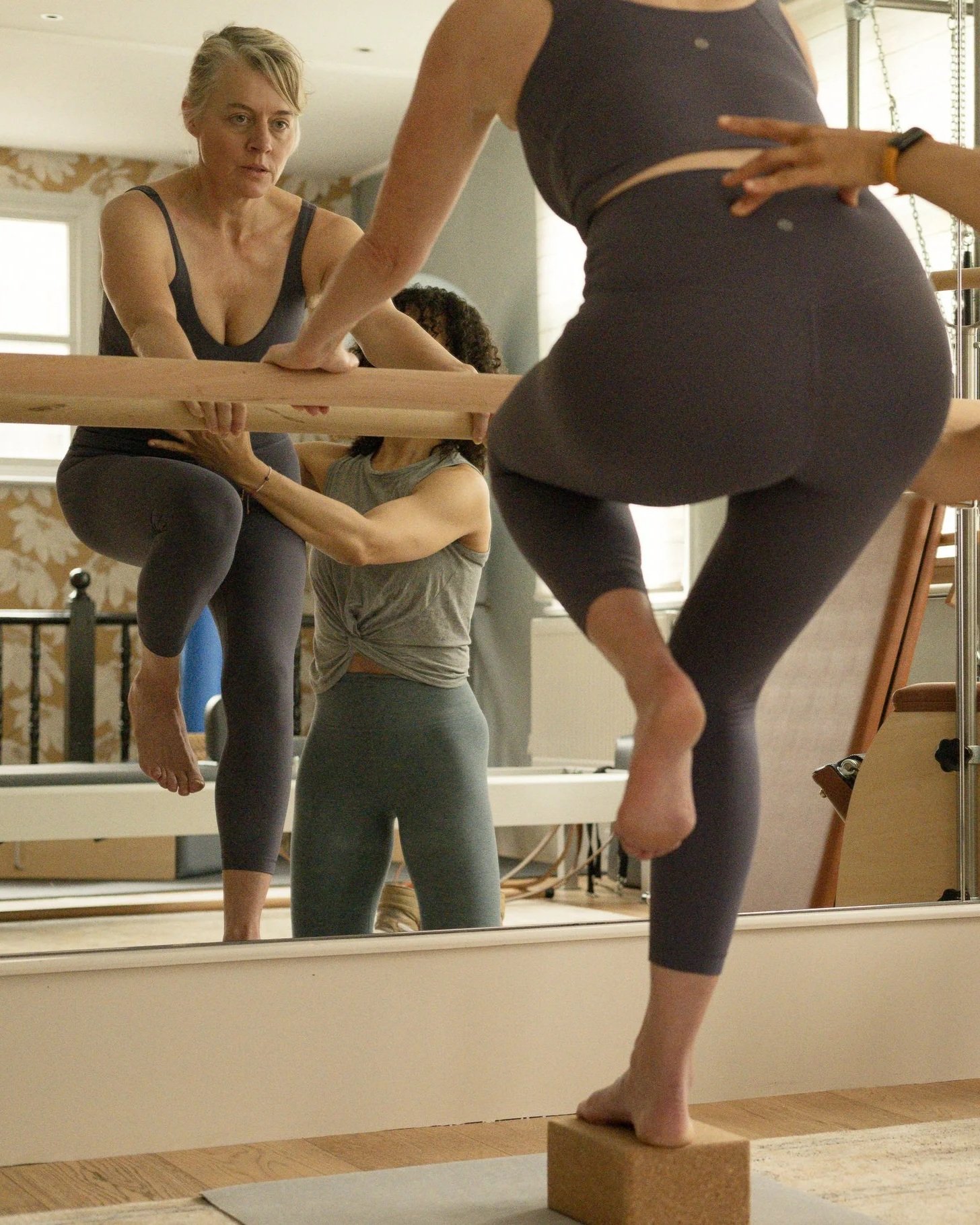
Beyond the Physical
Perhaps the most interesting adaptation isn't happening in the muscles at all.
At some point during these exercises, the challenge stops being purely physical. The legs are burning, the arms begin to tremble and the body wants to stop. In that moment, something else is being trained alongside the muscles.
This type of work teaches us to distinguish discomfort from danger, to remain attentive rather than reactive, and to recognise that our first impulse to stop isn't always an accurate reflection of our true capacity. Learning to distinguish discomfort from danger is a practice both in movement and in life. Rather than immediately escaping the sensation, we learn to stay curious, to keep breathing and to discover something more within ourselves.
This isn't about pushing through pain or ignoring the body's signals. It's about developing the judgement to recognise the difference between a body that is working hard and one that is asking for protection.
Over time, the confidence that develops through this process extends beyond the studio. We become a little more patient with challenge, a little more comfortable with discomfort and a little more trusting of our own capacity. The muscles become stronger, certainly, but so too does our relationship with effort itself.
Learning to distinguish discomfort from danger is a practice both in movement and in life.Exercise with Intention
The next time you're holding a wall sit, staying with the burn for one more breath or resisting the urge to stop, I hope you'll think back to this article.
You'll know that those final few seconds are doing more than simply making the exercise feel harder. Every hold and every moment spent under tension has an intention.
So when the muscles begin to shake, don't think of it as something to fear or avoid. Recognise it for what it is: feedback. A sign that your body is adapting, and you're evolving with it. Understanding the intention behind the work changes the way we experience it, which turns every exercise from something to simply get through into something to become curious about.
"The pose begins when you want to leave it." — B.K.S. Iyengar